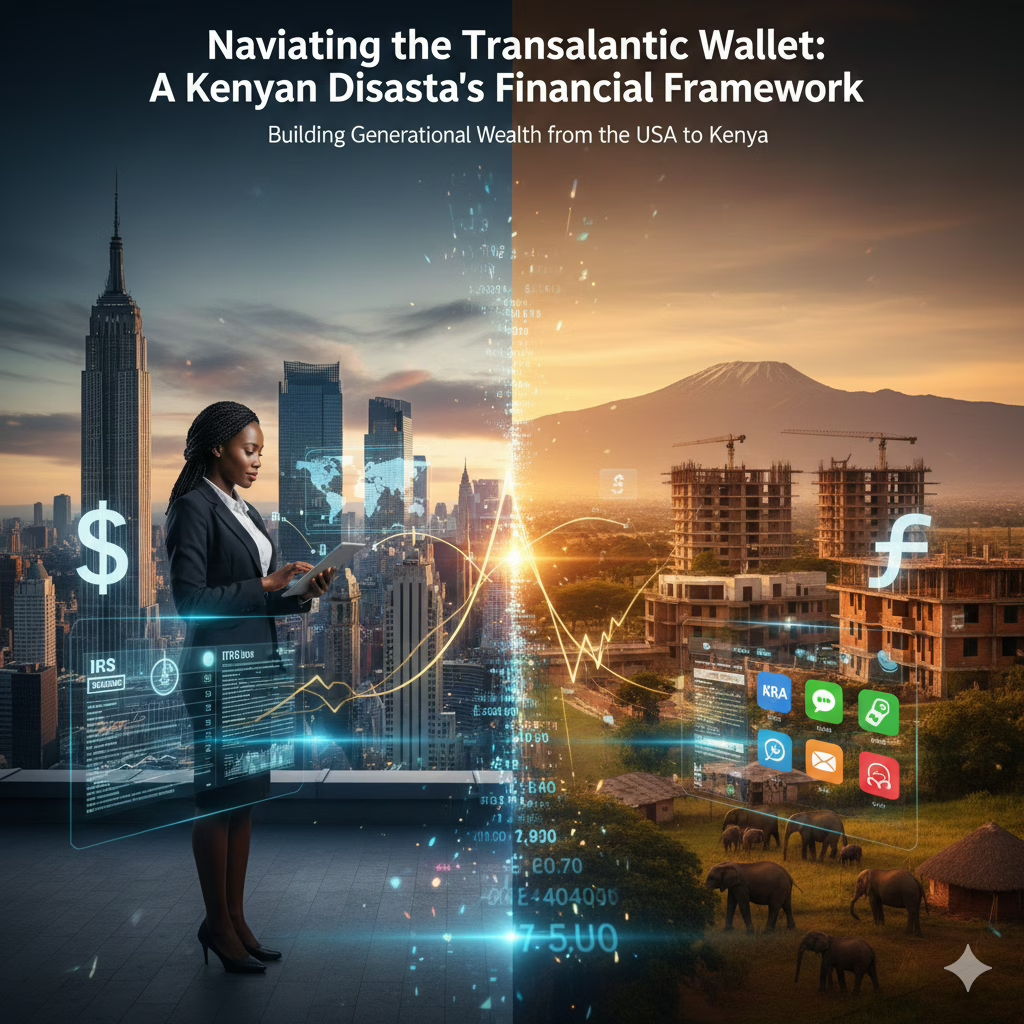
Managing a financial footprint across two continents is one of the most complex — and consequential — challenges facing Kenyan professionals living in the United States.
Today’s diaspora is no longer just sending money home for consumption. It is building businesses, acquiring real estate, investing in capital markets, and planning multi-generational wealth across jurisdictions. In 2024, Kenyans abroad remitted nearly USD 5 billion, making diaspora inflows Kenya’s largest source of foreign exchange.
This guide is designed as a strategic framework for the “48th County” — Kenyans living in the USA who want to move from informal remittances to structured asset management. It covers tax compliance, banking, investments, real estate, remote entrepreneurship, and legacy planning, with a strong emphasis on risk management, transparency, and long-term wealth preservation.
For readers at an early stage of their journey, these strategies work best when aligned with a broader personal wealth framework. 👉 Here is your ultimate guide to Financial freedom
1. The Dual Tax Landscape: KRA vs. IRS
The most critical aspect of managing money between the USA and Kenya is understanding tax obligations in both jurisdictions.
There is currently no Double Taxation Agreement (DTA) between Kenya and the United States. Instead, both countries rely on unilateral relief mechanisms to reduce the risk of the same income being taxed twice.
Kenyan Tax Obligations (KRA iTax)
Kenya operates primarily on a source-based tax system. Income is taxable if it is earned in or derived from Kenya, regardless of where the taxpayer resides.
Key obligations include:
- Annual filing: Anyone with a KRA PIN must file returns via the iTax portal by June 30th
- Rental income: Residential rental income is taxed at a flat rate (commonly 15%)
- Dividends: Generally subject to withholding tax (typically 5% for residents)
- Treasury securities:
- Ordinary bonds: 10–15% withholding tax
- Infrastructure Bonds (IFBs): Tax-exempt in Kenya
Why this matters: Failure to file iTax returns — even when no tax is payable — can trigger penalties that complicate future transactions such as land transfers or bank borrowing.
👉 Monthly Tax Compliance Framework
US Tax Reporting: FATCA, FBAR, and Global Income
The United States applies citizenship-based taxation. US citizens and Green Card holders must report global income, including income earned in Kenya.
Key reporting requirements include:
- FBAR (FinCEN Form 114): Required if the total value of all foreign financial accounts exceeded $10,000 at any time during the year
(Includes bank accounts, SACCO deposits, and cash-value insurance policies) - FATCA (IRS Form 8938): Applies to specified foreign financial assets, with higher reporting thresholds depending on filing status
Avoiding Double Taxation: The Foreign Tax Credit
Diaspora Kenyans typically rely on the Foreign Tax Credit (IRS Form 1116). Taxes paid to KRA can be credited against US tax liabilities, ensuring you only pay the difference, if any.
2. Diaspora Banking: Bridging the Transatlantic Gap
Kenyan banks have significantly improved diaspora offerings, enabling remote onboarding, multi-currency accounts, and digital access.
Not all diaspora accounts are equal. Differences affect liquidity, borrowing power, and reporting simplicity.
Diaspora Account Comparison (Indicative)
| Feature | KCB Bank | Equity Bank | Stanbic Bank |
|---|---|---|---|
| Opening Balance | Low | Moderate | Low |
| Currency Options | KES, USD, GBP, EUR | Multi-currency | Multi-currency |
| Digital Platforms | iBank / App | Mobile App / EVA | App / Portal |
| Lending Access | Savings-backed loans | Diaspora mortgages | USD loans |
Strategic insight: Some goal-based savings accounts allow borrowing against deposits, creating a self-collateralizing structure for Kenya-based projects while maintaining USD liquidity abroad.
Remittances and Fintech Channels
Fintech platforms have dramatically reduced the cost and friction of sending money to Kenya. Many diaspora members now prefer app-based transfers due to speed, transparency, and lower fees.
Key considerations:
- FX margins matter more than headline “zero fees”
- Speed vs. reversibility
- Integration with M-Pesa and bank accounts
3. Investing in Kenya’s Capital Markets (From the USA)
The Central Bank of Kenya has expanded access to government securities through DhowCSD, allowing diaspora investors to participate remotely.
Treasury Bills and Bonds
- Treasury Bills: Short-term (91, 182, 364 days)
- Treasury Bonds: Medium to long-term (1–30 years)
- Minimum investment: KES 50,000
Why Infrastructure Bonds (IFBs) Matter
Infrastructure Bonds are particularly attractive to diaspora investors because:
- Interest income is tax-exempt in Kenya
- Yields are often higher than standard bonds
- Payments are predictable and transparent
4. The Power of SACCOs for Diaspora Wealth Building
SACCOs remain one of the most effective wealth-building tools for Kenyans abroad.
Unlike banks, SACCOs offer a multiplier effect, allowing members to borrow three to four times their savings at relatively stable interest rates.
Why SACCOs Work for the Diaspora
- Higher long-term returns on deposits
- Access to affordable credit
- Collective bargaining power
- Cultural familiarity and trust structures
Some SACCOs are specifically structured to serve diaspora members, enabling pooled investments in real estate and private enterprises.
5. Real Estate: Forensic Due Diligence Is Mandatory
Real estate attracts the largest share of diaspora capital — and also carries the highest fraud risk.
Most diaspora losses occur before the first physical site visit.
The Diaspora Property Due-Diligence Protocol
Follow this checklist rigorously:
- Title Search: Verify ownership and encumbrances via ArdhiSasa or a qualified advocate
- Registry Index Map (RIM): Confirm physical boundaries match official survey records
- Seller Verification: Cross-check National ID and KRA PIN
- Escrow Payments: Never pay individuals or agents directly
- Independent Valuation: Confirm market pricing
Strategic Investment Zones (Indicative)
- Nairobi outskirts: Residential and commercial demand
- Kiambu County: Gated communities and agriculture
- Machakos / Kitengela: Industrial and affordable housing
- Coast (Diani, Mombasa): Holiday homes and speculative plays
👉 Find our more on Real Estate investments in this article
6. Remote Entrepreneurship: Building and Managing a Business from the USA
Kenya’s eCitizen and Business Registration Service platforms allow remote company incorporation, making it possible to start and own a Kenyan business without being physically present.
Why Tools Matter More Than Trust
Many diaspora ventures fail due to over-reliance on family members instead of systems.
Professional tools reduce:
- Emotional conflict
- Financial leakage
- Compliance risk
Key categories to consider:
- Payroll and statutory compliance systems
- Employer-of-Record (EOR) services
- Remote access and reporting tools
👉 Launching or managing a business in Kenya
7. Legacy Planning: Mirror Wills and Asset Protection
Estate planning is complicated by conflicting legal systems.
- Immovable assets (land) follow the law of where they are located
- Movable assets often follow the law of domicile
The Mirror Will Strategy
Most diaspora professionals benefit from two wills:
- A Kenyan will covering land and local businesses
- A US will covering assets held abroad
Family Trusts
Trust structures offer stronger protection against fraud, disputes, and misuse by unauthorized parties. Assets owned by a trust are easier to manage across generations.
8. Economic Outlook and Risk Considerations (2026–2027)
As Kenya approaches an election cycle, diaspora investors should remain cautiously optimistic.
Key themes:
- Moderate economic growth driven by agriculture and services
- Gradual easing of interest rates
- Election-related slowdown in public spending
Risk strategy: Maintain liquidity, diversify income streams, and hedge currency exposure where possible.
From Remitter to Asset Manager
The shift from passive remittance-sending to active asset management requires discipline, systems, and compliance.
By combining:
- Digital platforms (banking, DhowCSD, registries)
- Institutional vehicles (SACCOs, trusts)
- Professional oversight
…Kenyans living in the USA can secure their financial future while contributing meaningfully to Kenya’s economic development.
👉 [Internal link here: SME record-keeping / accounting fundamentals]
Diaspora Financial Checklist
Use this checklist as an annual review to keep your financial footprint in Kenya compliant and secure:
- ⬜ File KRA iTax returns by June 30th
- ⬜ Report foreign accounts if aggregate value exceeds $10,000 (FBAR)
- ⬜ Register for DhowCSD if investing in bonds
- ⬜ Verify all land titles before making payments
- ⬜ Draft mirror wills covering both jurisdictions
Frequently Asked Questions
Yes. Kenyans living in the USA may still be required to pay tax in Kenya on income that is earned or sourced in Kenya, such as rental income, business profits, dividends, or interest from Kenyan investments. Kenya uses a source-based tax system, meaning residency does not remove the obligation to file returns or pay tax on Kenyan income.
No. Kenya and the United States currently do not have a formal Double Taxation Agreement (DTA). To avoid being taxed twice on the same income, diaspora Kenyans typically rely on foreign tax credits, claiming tax already paid to the Kenya Revenue Authority (KRA) against their US tax liability where applicable.
In many cases, yes. If the total value of all your foreign financial accounts (including Kenyan bank accounts, SACCO deposits, and some insurance policies) exceeds $10,000 at any point during the year, you are generally required to file an FBAR (FinCEN Form 114). Additional reporting under FATCA (Form 8938) may apply depending on your filing status and asset values.
Yes. Kenyans living in the USA can invest directly in Kenyan Treasury Bills and Bonds through the Central Bank of Kenya’s digital platform. The process allows remote participation, and the minimum investment amount is relatively accessible. Infrastructure Bonds are especially popular among diaspora investors because their interest income is tax-exempt in Kenya.
Buying property from abroad requires forensic due diligence. You should always verify the title through official land registries, confirm survey boundaries, independently verify the seller’s identity, and use escrow or advocate-managed accounts for payments. Avoid paying individuals or agents directly, as most diaspora property losses occur before any physical site visit.