
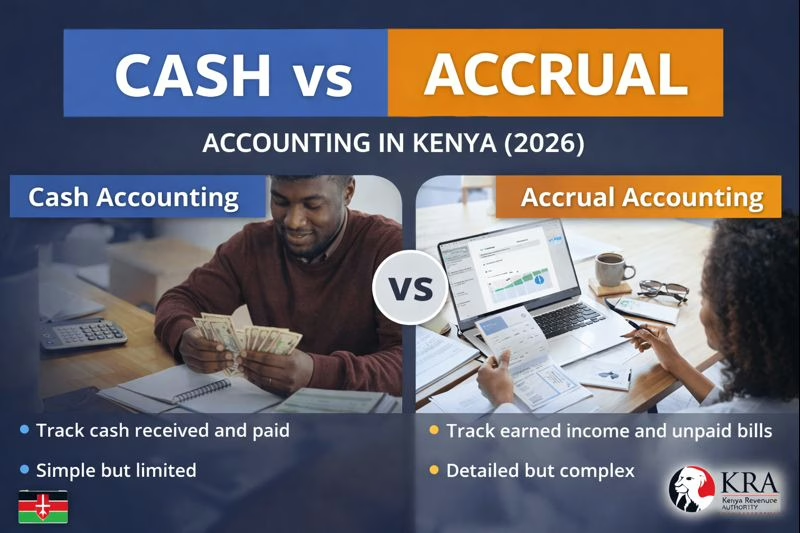
As a business owner or finance professional in Kenya, the accounting method you choose — cash-basis or accrual-basis — shapes how you see your business, how you comply with the law, and how you plan for growth.
This article breaks down the differences clearly, explains what each method means for your business, and shows how Kenyan law and tax systems treat these approaches. This is practical knowledge — not theory — and it’s essential for staying compliant and making informed financial decisions.
1. Accounting Methods at a Glance
🧾 Cash-Basis Accounting
With cash-basis accounting:
- You record income when cash is received
- You record expenses when cash is paid
This method is simple and gives you a real-time view of your cash position — useful if your enterprise is very small or you deal mainly in cash.
Pros
- Easy to understand
- Requires minimal accounting knowledge
Cons - Doesn’t track money you expect to receive or owe
- Can give an incomplete picture of financial performance
📊 Accrual-Basis Accounting
Accrual accounting recognises revenue and expenses when economic events occur — not when cash moves.
For example:
- You record revenue when you deliver a service
- You record an expense when you receive a bill
This method aligns with international standards and gives you a truer view of profitability and business obligations.
Pros
- Tracks assets, liabilities, payables, and receivables
- Offers deeper business insight
Cons - Requires more skill, systems, and discipline
2. Why the Distinction Matters for Kenyan SMEs
Kenya’s regulatory framework increasingly expects businesses to maintain proper accounting records that reflect more than just cash movements. Under the Companies Act 2015, firms must keep records that:
- Explain all transactions
- Show assets and liabilities
- Produce statements that give a fair view of financial position
This infrastructure aligns more naturally with accrual-based thinking, even if you start with cash accounting internally.
3. How Kenyan Tax Authorities View Accounting Methods
📍 KRA and Accrual Recognition
The Kenya Revenue Authority (KRA) generally treats income as taxable when it is earned — not just when you receive cash. That means a service you delivered but haven’t yet been paid for may still be taxable.
In high-profile cases, such as KRA vs. Fintel Limited, Kenyan courts confirmed that accrual entries in financial statements can trigger tax obligations like withholding tax, even before cash payment is made. This connects your accounting method directly to your tax outcomes.
Moreover, with systems like eTIMS now required for tax-deductible invoices, your internal record-keeping must support digitised transactions — another push toward accrual-ready accounting structures. You can find out etims survival thoughts here
4. Choosing What’s Right for Your Business
🟦 When Cash Basis Makes Sense
You might use cash accounting if:
- Your enterprise is a micro or very small business
- You need a simple way to track everyday money flow
- Cash transactions dominate operations
This works well if your business stays small and you file taxes using simplified schemes like Turnover Tax (TOT).
🟧 When Accrual Basis Is Better
Accrual accounting is preferable if:
- You have credit sales or invoices
- You want an accurate view of profitability
- You need compliance with audit or lender requirements
- You’re building systems like those discussed in our article on Manual vs Accounting Software in Kenya (2026), which explores why digital systems integrated with eTIMS are essential.
In many cases, even businesses that start with cash accounting begin building accrual systems internally so they can forecast, plan, and comply effectively.
5. Practical Effects on Liquidity and Profitability
The key difference between the methods shows up most clearly in profit reporting vs. actual cash flow:
- Under cash basis, you might show a positive bank balance but overlook upcoming bills or uncollected sales.
- Under accrual basis, you see a full picture of obligations and entitlements — even if cash is delayed.
This is why professional guidance often combines accrual records with periodic statements of cash flows to manage liquidity and profitability together.
6. Tools That Help You Manage Both Worlds
As your business grows, you’ll likely need systems that can:
- Track invoices and payments
- Record accounts payable and receivable
- Help with eTIMS-compliant invoicing
- Produce reports aligned with Kenyan tax reporting
For many SMEs, this means moving beyond manual methods to digital tools — explore our Accounting Software Recommendation Tool or compare top platforms like QuickBooks, Sage, and Zoho in Best Accounting Software in Kenya 2026, which can support accrual functionality and eTIMS compliance.
7. Final Thoughts: Grow with Clarity
There’s no one-size-fits-all answer, but this rule works well in Kenya:
Start simple, but move toward accrual-ready systems as soon as your business scales or demands compliance transparency.
Cash accounting gives you clarity on what’s in the bank. Accrual accounting gives you clarity on what your business actually owns and owes. Understanding both lets you:
- Stay compliant
- Make better decisions
- Prepare for audits
- Support financial growth
For more on structuring your SME’s financial systems effectively, check out our pillar guide on SME accounting and finance, where this article fits as a key supporting explanation.
👍 What’s Next on LiveLife.ke
After you finish this article, you might find the following particularly useful:
- Manual vs Accounting Software in Kenya (2026): What Every SME Must Know — tool choices and compliance realities
- Accounting Software Recommendation Tool — find the right digital solution
- Best Accounting Software in Kenya 2026 — comparative review

