
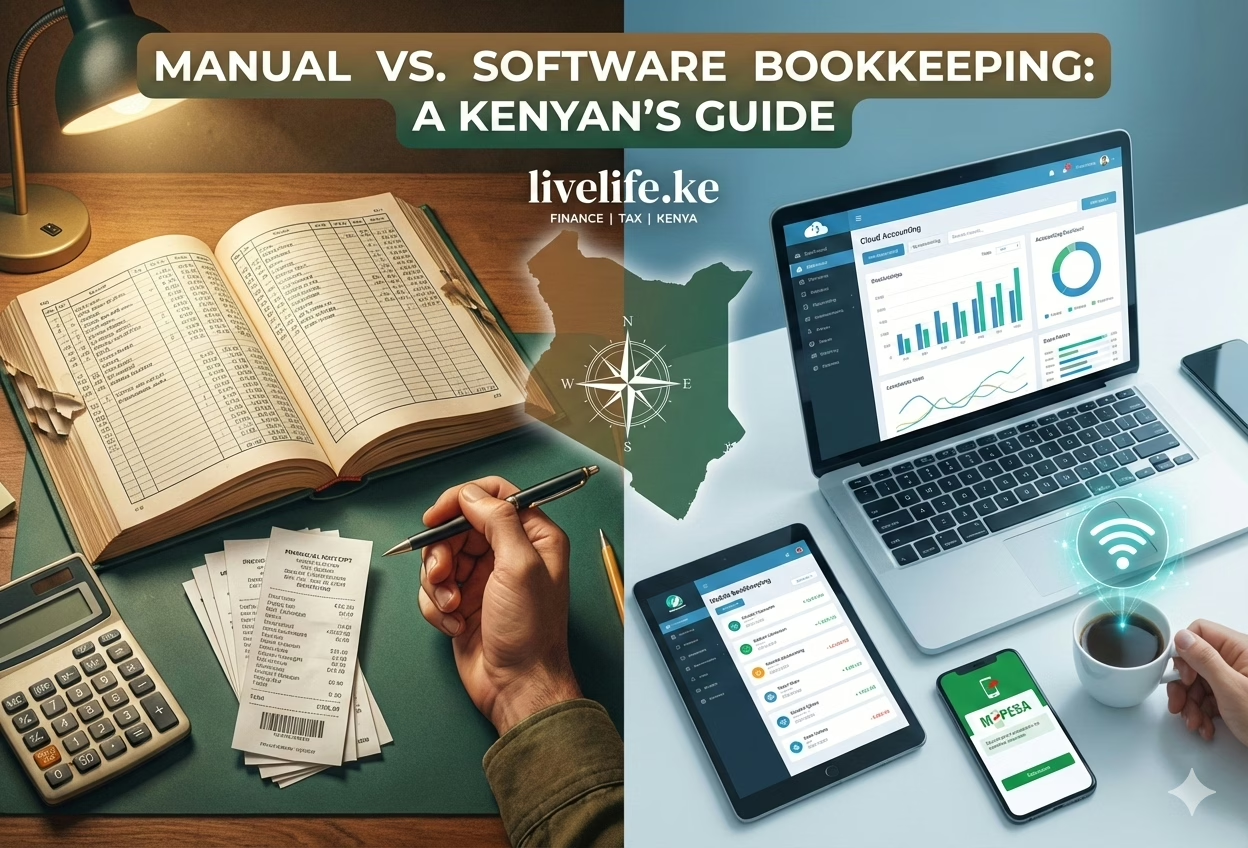
The financial landscape for Kenyan entrepreneurs is undergoing its most significant transformation in a generation.
As we navigate the 2025–2026 fiscal year, the traditional counter book is no longer just a record-keeping tool — it has become a strategic liability.
For many readers of LiveLife.ke, the decision to stick with manual bookkeeping or migrate to accounting software is now the difference between sustainable growth and a crippling tax bill.
With the Kenya Revenue Authority (KRA) enforcing the Electronic Tax Invoice Management System (eTIMS) across all businesses, the stakes have never been higher.
This article breaks down the economic, regulatory, and operational realities of manual versus software bookkeeping in Kenya today. Here is a comprehensive article on accounting software for SMEs in Kenya
The Legacy of Manual Bookkeeping: Simple, but at What Cost?
Manual bookkeeping has long been the backbone of the Jua Kali sector and small retail businesses.
Its appeal is obvious:
- A standard A4 ledger costs as little as KSh 185
- No electricity, software, or training required
- Familiar and tangible
However, the low upfront cost is deceptive.
Manual systems are:
- Prone to human error
- Retroactive (you only discover problems weeks later)
- Difficult to audit
- Impossible to integrate with KRA systems
In today’s fast-moving Kenyan economy, managing a business using manual books is like driving while looking only in the rear-view mirror.
The eTIMS Reality: Compliance Is No Longer Optional
From 1 January 2024, KRA requires that business expenses be supported by valid eTIMS-compliant invoices for tax deductibility.
This changes everything.
If you issue manual receipts:
- Your customers cannot claim expenses
- Corporate clients avoid you
- Your costs may be disallowed during audits
In effect, manual receipts make your business up to 30% more expensive to deal with.
The “Artificial Profit” Trap Explained
Here’s how many Kenyan SMEs are unknowingly over-taxed.
Assume:
- Revenue: KSh 1,000,000
- eTIMS-supported expenses: KSh 400,000
- Manual (unsupported) expenses: KSh 300,000
Actual profit:
1,000,000 − 700,000 = KSh 300,000
Taxable profit (KRA view):
1,000,000 − 400,000 = KSh 600,000
Corporation tax (30%):
KSh 180,000
👉 Tax consumes 60% of the real profit, simply because expenses were unsupported.
This single issue is forcing thousands of SMEs to abandon manual systems.
Why Accounting Software Is Winning in Kenya
Modern accounting software is no longer expensive or complicated.
Many cloud-based tools cost less than KSh 1,000 per month and provide:
- Real-time financial visibility
- Automated eTIMS invoicing
- Instant reports for VAT, PAYE, and income tax
- Remote access from any smartphone
Popular Accounting Software Used by Kenyan SMEs
| Software | Approx. Monthly Cost | Best For |
|---|---|---|
| Zoho Books | From KSh 849 | Service businesses, freelancers |
| Lipabiz | From KSh 1,000 | Retail & POS-based SMEs |
| QuickBooks Online | From KSh 2,500 | Growing professional firms |
| TallyPrime | One-time license | Inventory-heavy businesses |
| Tyms | From KSh 400 | Micro-startups |
Disclosure: Some software mentioned may have commercial partnerships. Recommendations are based on functional suitability for Kenyan SMEs.
The Kenyan Advantage: M-Pesa Integration
In Kenya, proper bookkeeping means proper M-Pesa tracking.
Manual systems require copying SMS messages into books — a process full of errors.
Modern accounting software:
- Detects payments automatically
- Generates eTIMS-compliant receipts
- Updates ledgers instantly
- Reconciles Till and Paybill accounts
This removes guesswork and improves cash-flow control.
Understanding M-pesa till charges
Cost Comparison: Manual vs Digital (Total Cost of Ownership)
While a ledger book costs a few hundred shillings, the hidden costs are significant.
Digital setup costs (approximate):
- Refurbished laptop: KSh 15,000–25,000
- Internet: KSh 1,500–3,000/month
- Software: From KSh 400–1,000/month
By comparison:
- Manual bookkeeping audits can cost KSh 50,000+ annually
- Tax disputes cost far more
Digital bookkeeping is not an expense — it is risk insurance.
Choosing the Right Software for Your Business Stage
- Freelancers & startups: Zoho Books or QuickBooks Online
- Retail & inventory businesses: TallyPrime
- Mid-sized enterprises: Sage solutions with payroll and compliance modules
The right choice depends on VAT status, inventory complexity, and growth plans.
Skills Gap: The Real Barrier
The biggest obstacle isn’t cost — it’s skills.
Fortunately, Kenyan training institutions now offer affordable courses in:
- Tally
- QuickBooks
- Computerized accounting fundamentals
For very small traders, eTIMS Lite (via eCitizen or *222#) provides a legal entry point into compliance.
The Future: AI, Compliance & Real-Time Finance
By 2025:
- Manual bookkeeping will struggle to survive in the formal economy
- AI-powered fraud detection will become standard
- Sustainability and audit reporting will increase
- Monthly reports will be replaced by live dashboards
Final Verdict: It’s Time to Close the Book
For Kenyan SMEs, the manual vs software debate is effectively over.
Manual bookkeeping may feel familiar, but it exposes businesses to:
- Disallowed expenses
- Lost clients
- Compliance penalties
- Poor decision-making
Accounting software — integrated with eTIMS and M-Pesa — is now the minimum standard for survival and growth.
Strategic Takeaways for Kenyan SMEs
- Work only with suppliers who issue eTIMS invoices
- Use Buyer-Initiated Invoicing for micro-traders
- Automate M-Pesa reconciliation
- Secure your data using cloud platforms
FAQs
Yes, manual bookkeeping is still legal in Kenya. However, manual records alone are no longer sufficient for tax compliance. The Kenya Revenue Authority (KRA) requires that all deductible business expenses be supported by eTIMS-compliant electronic invoices. If your expenses are recorded manually but lack valid eTIMS receipts, they may be disallowed during a tax audit, leading to higher taxable profits and penalties.
You can use Excel for internal tracking, but Excel does not meet KRA’s compliance requirements on its own. Excel lacks an audit trail, cannot generate eTIMS-compliant invoices, and does not integrate with KRA systems or M-Pesa. For VAT-registered or growing SMEs, Excel should only be a supplementary tool, not a replacement for proper accounting software.
Some of the most affordable accounting software options that support eTIMS in Kenya start from about KSh 400 to KSh 1,000 per month, depending on features and business size. These include cloud-based tools for micro and small businesses, as well as desktop options like Tally for inventory-heavy SMEs. The best choice depends on whether you need offline access, inventory management, or direct M-Pesa integration.

